.png)
 1 hour ago
2
Hungary’s new government will on Wednesday reveal the names of tens of thousands of state informants from the communist era in an attempt to confront the past and rebuild public trust.
From 1945 to 1989, Hungary’s communist state-security services relied on an extensive network of informants to monitor society and suppress dissent. Some were blackmailed or coerced into reporting on neighbours, friends, colleagues and even family members; others were recruited through promises of various advantages.
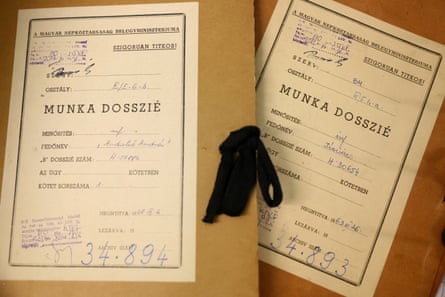
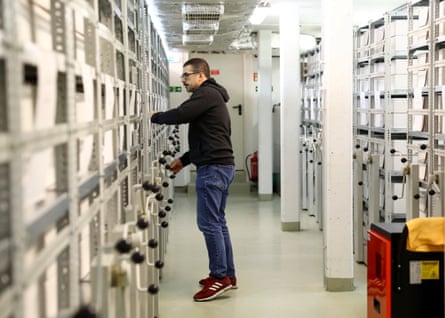
For decades, the extent of this network was hidden from public view. The “agent files”, held in the basement of the Historical Archives of the State Security services, remained largely inaccessible to the public, despite repeated calls and partial leaks.
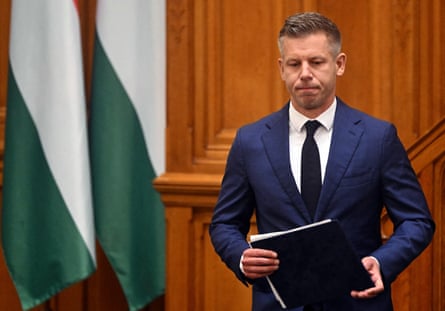
During his campaign leading up to Hungary’s April parliamentary elections, Péter Magyar promised to make the state-security files public, a promise he seems intent on fulfilling now he is in power.
In September, his government passed a law paving the way for the files to be made public, a move more than two-thirds of the country supported according to polls. The release was initially scheduled for the anniversary of the 1956 anti-Soviet revolution but was pushed back to 4 November.
“A democratic society has the right to know its past,” Zoltán Tarr, the minister of social relations and culture, wrote on Facebook.
Previously, access to the reports on informants was restricted to researchers and relatives of victims. With the new, searchable online database, Hungary’s former state-service will become the most transparent in the former eastern bloc, researchers say.
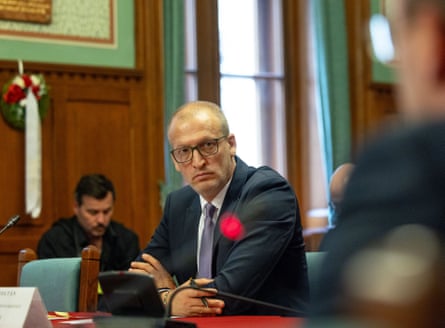
“We are opening wide a door that was left ajar,” said István Papp, a historian and head of the academic department of the archives.
“As a historian, I agree with the release of the files. But on a personal level, I feel for those who will face their family’s history for the first time,” Papp said. Of the 50,000 to 60,000 people whose names appear in the files, historians estimate 10% are alive today.
For three decades, the former eastern bloc has been divided on how to publish agent files, and when. In East Germany, the Bundestag opened state security Stasi files in 1992. In the Czech Republic, they became open to the public in 2003. Most recently, Latvia published files on informants in 2018.
Miklós Kiss, a survivor of a Hungarian forced labour camp and president of an association for victims, would have preferred if Hungary had followed Germany’s example and released the files earlier. “If that would have happened, everything would be done and dusted by now.
“People will learn that there were traitors in every family, in every neighbourhood and street,” he added. “But what are we supposed to do with that now?”
Placed side by side, the documents would stretch for three miles, enough to trace the perimeter of London’s Hyde Park. Even so, the collection is small compared with that of the Polish or Romanian secret services, Papp said. In Hungary, many files were destroyed during the 1956 anti-Soviet uprising; others disappeared during the transition of 1989, a gradual, largely peaceful process that gave the authorities time to get rid of incriminating material.
Many of the records will be incomplete, as the agent’s motivation, or extent of reporting, will remain unknown. Of the 60,000 people mentioned in the files, the archives include detailed files, background checks and statements for only 9,000 people. These will be released in February, after personal information, including details of health, addictions and sexuality, as well as information about victims, has been redacted in accordance with privacy laws.
Alexander Faludy, a freelance journalist and Anglican priest, read the files on his family almost two decades ago. His grandfather, György Faludy, spent more than three years in a Hungarian labour camp on fabricated accusations, and later while in exile wrote his book, My Happy Days in Hell.
after newsletter promotion
One report in the files, by a Hungarian woman living in London who befriended Faludy’s grandmother as she was dying of cancer, made him particularly angry. “But then, I looked at the details of the informant. There was a really ominous part in her file, with names of relatives living in Hungary, including details of her elderly parents. Suddenly, my anger evaporated. I just felt very sorry for her,” Faludy said.
“Exile was very painful for my family, but it also conferred certain moral luxuries. And that makes me hesitant in terms of passing judgment on people for what they did if they had to stay in Hungary,” he added.
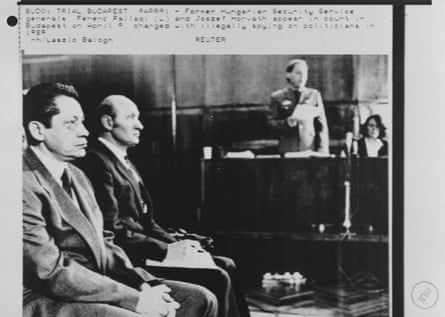
The identities of secret-service agents have long fascinated Hungarians. Since the 2000s, several partial lists have emerged, naming politicians and prominent artists. Many of them denied involvement, but the allegations alone were enough to plunge governments into political crises.
To date, not many former agents have spoken publicly about their experiences, and the subject remains taboo.
In July, Szemlélek, an independent, religious online journal, published a call for former agents to come forward. Religious figures were a known target of the state services and they were often blackmailed into reporting on their congregation. According to some estimates, 7-10% of them cooperated with the state.
So far, no one has volunteered to tell their story. “I think many people feel that there isn’t really much to speak about,” the paper’s editor-in-chief, Szilárd Szőnyi, told the Guardian. “Or they think that their story is so complex that they cannot, do not want to, or are not ready to tell it.”
Domokos Szokolay, a historian, said he was hopeful that this time “the release won’t turn into a public shaming, but that people will understand that these are complex issues”. His father, Zoltán Szokolay, a poet and politician, was outed as an informant in an unofficial list published in 2005.
Szokolay has yet to read all the reports on his father, who died in 2020. By speaking openly about transgenerational trauma, he hopes to reassure others who discover their loved ones were agents that they are not alone, and to encourage them to start conversations about what they find.
“There are so many family secrets or traumas that we can already talk about: if someone’s parent is an alcoholic, or a gambling addict. But people worry that they will be judged based on the agent files,” he said. “I know confronting one’s family history can be scary or even painful. But learning about it is always better.”








 English (US) ·