.png)
 1 hour ago
1
“It’s disappointing, it’s just another kicking,” said a youth worker after the town in which they work was labelled as the hardest place in which to be a child in England.
“It suggests our children are living unhappy lives,” said a teacher, who described her pupils as joyful.
A clearly riled Chris Cooke, the mayor of Middlesbrough, said: “We get told a lot by people outside this place what we are. We know what we are. There is another side.”
They were all reacting to a report published this week by the children’s commissioner, Rachel de Souza, titled The Childhood Lottery, in which she declared childhood to be in “a state of emergency”.
The report drew on a “landmark dataset” that “brings together 162 measures of children’s lives to build a comprehensive picture of the areas in England where it is the hardest to grow up”. The metrics included everything from child poverty to exclusion rates to poor air quality. And at the bottom was Middlesbrough.
The Guardian visited the town this week and spoke to children and professionals about growing up there. No one denied there were many challenges, but equally no one thought the label was helpful.
At a busy, buzzy youth club in the residential suburb of Coulby Newham, children aged 10 and up were making papier-mache Halloween decorations, cooking, playing table tennis and, outside on a strikingly mild October evening, getting ready to play dodge ball. “You’d think they were playing professionally,” said one volunteer.

Hannah*, 15, said her life was good but she knew it was not the same for others. “I love living in Middlesbrough. I love Albert Park and the Dorman Museum. I love going to the football. I love coming to youth club and making friends,” she said.
A boy looked confused when asked if it was hard being a child in Middlesbrough. “I’m going to be here the rest of my life,” he said. “Why would I leave?”
His friend let the side down by declaring: “I’m going to a hot country when I’m older … Hawaii. Or Zanzibar. Middlesbrough is too cold and scruffy.”
Wayne Mason, a former soldier who is chief executive of Linx Youth Project, which runs the club, said of the report: “We are disappointed. What it’s doing is attaching yet another label to Middlesbrough and its young people, and we already have many, many labels. It’s disappointing … all this negativity attached to the town.”
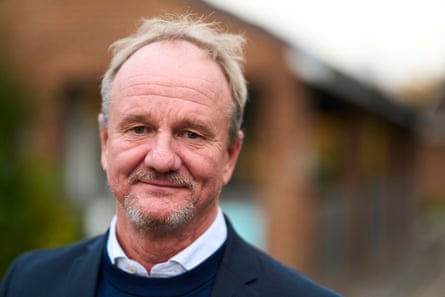
He and the project’s deputy, Eilís Sexton, were at the club but could not stay long as the local Rotary club was about to give them a much-needed and much-appreciated cheque.
Sexton was worried about the message the report sent out. “I’ve been thinking about young people who want to start their own families and how it’s going to make them feel, knowing that their child is going to have the ‘most difficult upbringing’ in the country? It is quite demoralising for them,” she said.
She was born and raised in the area and studied at Teesside University. “I did move out of Middlesbrough for six months and I hated it,” she said.
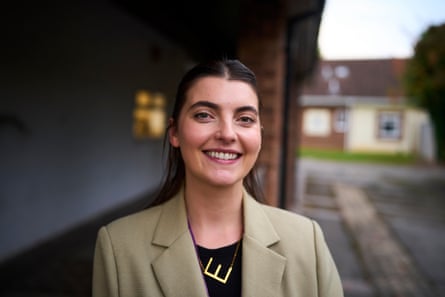
Neither of them disputed the statistics but they said there was another side. “Pride is the overriding thing that we see with the young people,” Mason said. “We know youngsters living in some of the most deprived areas of Middlesbrough, of which there are many, who don’t want to leave. They don’t want to leave because this is their home.
“We always talk about deprivation and poverty and crime, but we don’t talk about community.”
The report comes weeks after a collision on the A66 in which a car with five young people inside crashed into a police car carrying two police constables, killing the occupants of both vehicles.
Some subsequent media portrayals painted a picture of an urban dystopia where gangs were in charge, but residents said the reality was different.
It would have been hard for children to avoid media coverage about the deaths. Hannah said she had been past where it happened and burst into tears.
after newsletter promotion
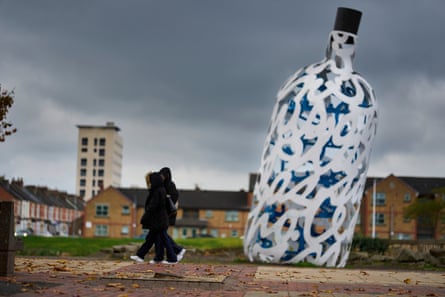
In Middlesbrough town centre there is a huge open square and the contemporary art gallery Mima, currently hosting the Turner prize. Next door is the town’s oppressive 1970s-built magistrates court building. Opposite is the grand Victorian town hall where Cooke, the elected Labour mayor, has his office.
When it comes to the subject of it being hard to grow up in Middlesbrough, Cooke is better equipped than most to talk about it. He grew up in a violent family. His father took his own life when he was a teenager, and his mother’s mental health spiralled. He said that as a young boy he felt he had to be in charge of everything because he was terrified of being separated from his sister.
Cooke had periods of not going to school and ended up in care. “I bounced around the system. People struggled to take me because I was quite difficult. I think that’s the polite version. What wouldn’t have helped me during any of that time is someone telling me that my life was difficult or that my life would get harder or that this place wouldn’t let me achieve the things I wanted to.”
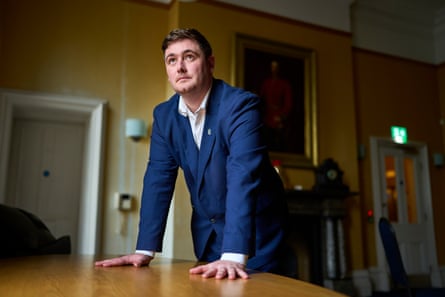
He said he remembered applying for jobs as an apprentice and being told not to include his TS6 postcode for fear of being judged. He not only included it, he made it bigger, he said. “This is why I’m angry. I don’t need people characterising Middlesbrough when we already know the challenges.”
The fact that Cooke came out the other side was, he said, because of “beautiful” foster carers and other people around him. Middlesbrough is one of 16 councils in England that spend more than 80% of their core funding on social care. Cooke said he was passionate about spending on youth services, reeling off a list of initiatives that included a fund to ensure there were youth clubs in every Middlesbrough postcode.

A 15-minute walk from the town hall is Newport primary school, where the headteacher, Patricia Maxwell, showed the Guardian around. It has a particularly well-stocked, well-used library – Middlesbrough’s reading for pleasure stats are way over the national average.
Maxwell had read the commissioner’s report. “It wasn’t telling me anything anything I didn’t already know,” she said. “But also it wasn’t telling people about all the positives that our children grow up with in Middlesbrough.”
Stacey Carlisle, the school’s deputy head, agreed. “It just suggests that those children are living really quite unhappy lives, and that is not the case for our children,” she said. “They’re joyous and joyful, our children. Yes, there might be challenges at home for some, but it’s the same in affluent areas as well.”
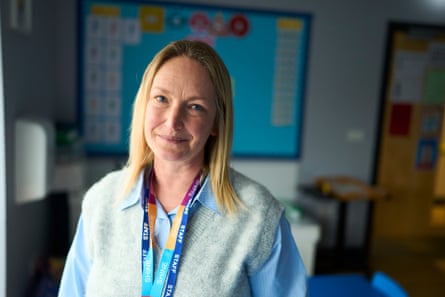
Both teachers said they would not want to work anywhere but Middlesbrough. “We’d like to do more,” Maxwell said. “We want our children to reach their full potential and to thrive and flourish and become the doctors or whatever it is that they want to be in the future.
“But what we don’t want is them to feel labelled and told that they can’t go on and achieve those things. Just because you’re living in a challenging environment does not mean that that defines you.”
*Name has been changed






 English (US) ·