.png)
 1 hour ago
2
It’s easy to run out of words to describe Rabindranath Tagore. The first non-European to win the Nobel prize in literature, Tagore was a Bengali poet, musician, novelist, philosopher, songwriter, painter, humanist and educator.
Born in 1861, Tagore left an indelible mark on the subcontinent’s literature, music, education and art. Among his enduring legacies are the national anthems of India and Bangladesh.
As Nobel laureate economist Amartya Sen once wrote, Tagore was “a towering figure in the millennium-old literature of Bengal”, whose songs resonate across eastern India and Bangladesh, while his ideas on education, nationalism and freedom of the mind remain relevant today.
Yet his work also made a deep impression on the literary world far beyond the shores of India. WB Yeats is said to have described Tagore as “greater than any of us”. Gitanjali, the collection of poems that won Tagore the Nobel prize that same year, was praised by the committee for its “profoundly sensitive, fresh and beautiful verse”. Tagore’s English translation was published in London that March and reprinted 10 times by the time the prize was announced in November.
Tagore’s life and works have, of course, been well documented, but a collection of material preserved in a private family archive is now being brought into public view for the first time at an exhibition by Christie’s, opening in Mumbai this month. The archive draws from Tagore’s visits to the family home of his protege, Maitreyi Devi, in the bucolic village of Mungpoo in Darjeeling between 1938 and 1940. He died in 1941.
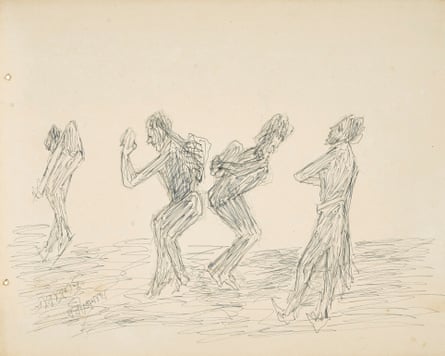
The collection on display – artworks, manuscripts, letters, photographs and personal effects – offers an intimate glimpse into Tagore’s creative process and personal world in his final years.
I spoke to the exhibition curator, Nishad Avari, head of south Asian modern and contemporary art at Christie’s, about the stories behind the archive.
One instructive document Avari points to is a manuscript from 1940. It appears to be a draft of Tagore’s memoir Chelebela or My Boyhood Days, in which he reflects on his life – from growing up in a large family in Calcutta (modern-day Kolkata) to the rapidly changing world ushered in by electricity and the motorcar.
For Avari, what stood out was how the ideas in the document echoed the educational philosophy Tagore put into practice in Santiniketan (or Abode of Peace), the experimental school he set up about 100 miles from the state capital.
“He speaks about how education is like being in prison and that it should be open and free … about the idea of wonder and even fear as inspiring creativity,” Avari told me.
“That’s a direct relationship to Santiniketan and the open model of the school where people sat under trees with their gurus and learned in the open. Education didn’t feel like a restriction, prison or imposition,” he added.
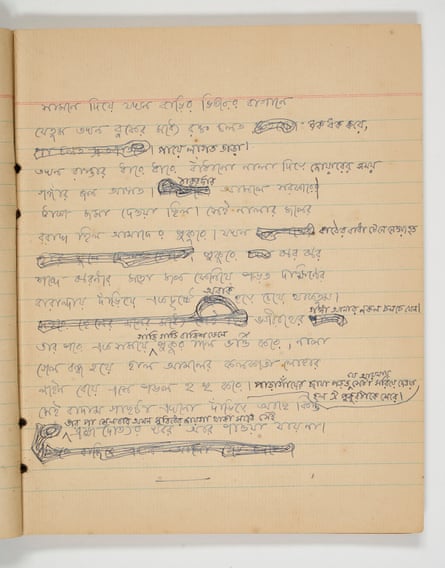
Avari points to another detail that makes this particular document valuable. Of the 10 complete manuscripts in the exhibition, it is the only one dictated to Devi, whose father was a close friend of Tagore’s. For Avari, this speaks to their close relationship and the trust he placed in her.
“If you look at the collection as a whole, she has copies of almost every single one of his publications signed to her by him,” he says. The collection includes hundreds of letters, too: first between Tagore and her father, and later between Tagore and Devi herself.
There are doodles among corrections, Avari explains, which show how his literary practice fed into his artistic practice. Alongside the manuscripts and correspondence are vintage photographs and personal effects, including a kurta and a lungi that Tagore left behind at the family home.
Among the artworks in the collection is a portrait of Devi, particularly notable because Tagore’s figure studies were not generally attributed to specific individuals in the way that portraits by his nephews, Abanindranath and Gaganendranath, often were, Avari said. There is also a landscape depicting the forests of Mungpoo, which Tagore embraced as a retreat.
On the international art market, Tagore’s paintings command significant prices. This year, Sotheby’s sold one of his watercolours for £1.02m (Rs 12.97 crore), nearly four times its low estimate.
Institutions such as Visva-Bharati in Santiniketan and the National Gallery of Modern Art hold much of Tagore’s archival materials, making the discovery of a private archive particularly rare.
He hopes that making these materials public will offer historians, scholars and admirers alike additional perspectives on Tagore. “We hope to add to the understanding of the artist, their career, and in this case, of course, our understanding of the man beyond his art as well.”
Rabindranath Tagore and Mungpoo runs between 10 November and 18 December at Christie’s space in south Mumbai.
What else we’re reading about
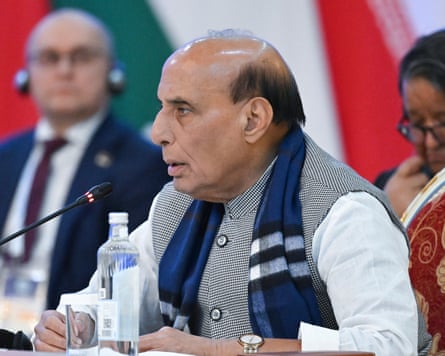
Politics | India has invited Pakistan to attend the Shanghai Cooperation Organisation’s Civilisational Dialogue Forum in New Delhi later this month, the Indian Express reported. It is the first invitation since the two neighbouring states engaged in a military conflict last year.
Law | Twenty-one media organisations have challenged India’s privacy laws in court, arguing that the controversial provisions threaten press freedom, Reuters reported. The petition warns that the law could expose journalists’ sources and force publishers to remove stories at the direction of authorities.
after newsletter promotion
Academia | Indian academic Mahmood Kooria, a lecturer at the University of Edinburgh, is among this year’s recipients of the Philip Leverhulme prize in Humanities. The £100,000 award recognises his work on the premodern Indian Ocean world.
Guest shelf
A recommendation from someone with great taste
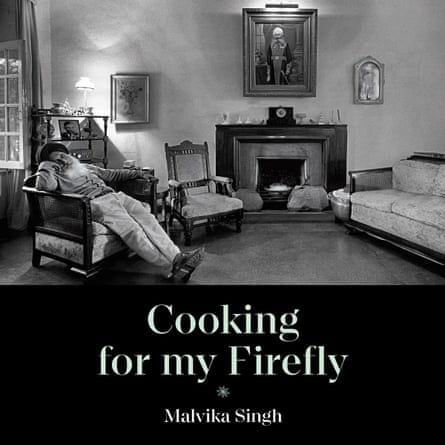
Freddy Birdy, a copywriter whose delightful words have earned him a devoted Instagram following, recommends writer and historian Malvika Singh’s cookbook, Cooking for My Firefly.
“This book isn’t about recipes, though it does include them. It is a voyage through another time and place, tracing the social fabric of India of the 60s, 70s and 80s, trickling down to today. Told in Malvika’s beautiful prose, it takes us to a time when people entertained in homes, not in restaurants; when dishes were cooked in-house and there were no caterers or party planners. An era long before Instagram posts, WhatsApp invitations, celebrity chefs and food delivery apps, when the point of having a party was simply to have fun. It is an archive of photographs, food, culture, gossip, movie stars, politicians, royalty, set against the spectacular backdrop of Malvika’s dining tables through the decades. I like to dip into it every now and then, much as one might do standing in a dark kitchen with the light of the refrigerator enticing you to midnight goodies.”
Count it
A number worth knowing
22,495

Indians lost Rs 22,495 crore (£1.77bn) to cyberfraud in 2025, Times of India reported citing data from the Home Ministry. While the figure is marginally down from the previous year, losses have risen sharply since 2023.
Vibe check
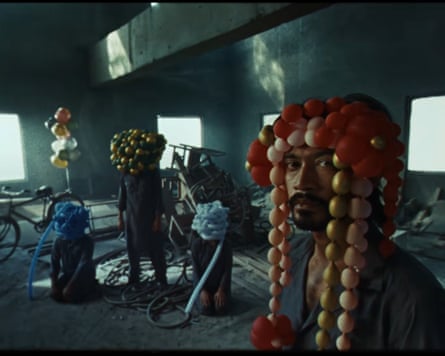
At a time when public anger has spilled into the streets, artist Aamir Aziz’s new track, Dopeher Blues (Afternoon Blues), captures the frustration and angst of a generation that has lived through many crises.
Aziz describes the song as an expression of a period of deep suffocation. Issues such as farmer suicides, unemployment and conflicts in Palestine and Kashmir, he told me, are things he has grown up with even as public attention shifts with the news cycle. It is also a warning, in part, against internet culture, where injustices risk becoming normalised.
Aziz, 35, works in acting, music and writing, and became an internet sensation with his defiant poem Sab Yaad Rakha Jayega (Everything Will Be Remembered) during the citizenship protests. At the heart of his new track is a note of defiance and hope: “We’ll find a way to sing,” he says, as he calls on everyone “to keep speaking up even in a climate of fear, misinformation and oppression.”
Get in touch
Do you have any thoughts or responses to this week’s newsletter? Is there anything you’d like us to cover in the future? Share your feedback by emailing us at thisisindia@theguardian.com and we may include your response in a future issue.







 English (US) ·