.png)
 51 minutes ago
1
News india India Says UNSC Veto Should Not Be Instrument Of 'Narrow Political Expediency', Calls For Reforms
Last Updated:October 27, 2026, 07:59 IST
India's UN envoy Parvathaneni Harish says the UNSC veto should not serve narrow political interests, calls for comprehensive reforms and equal rights for all permanent members.


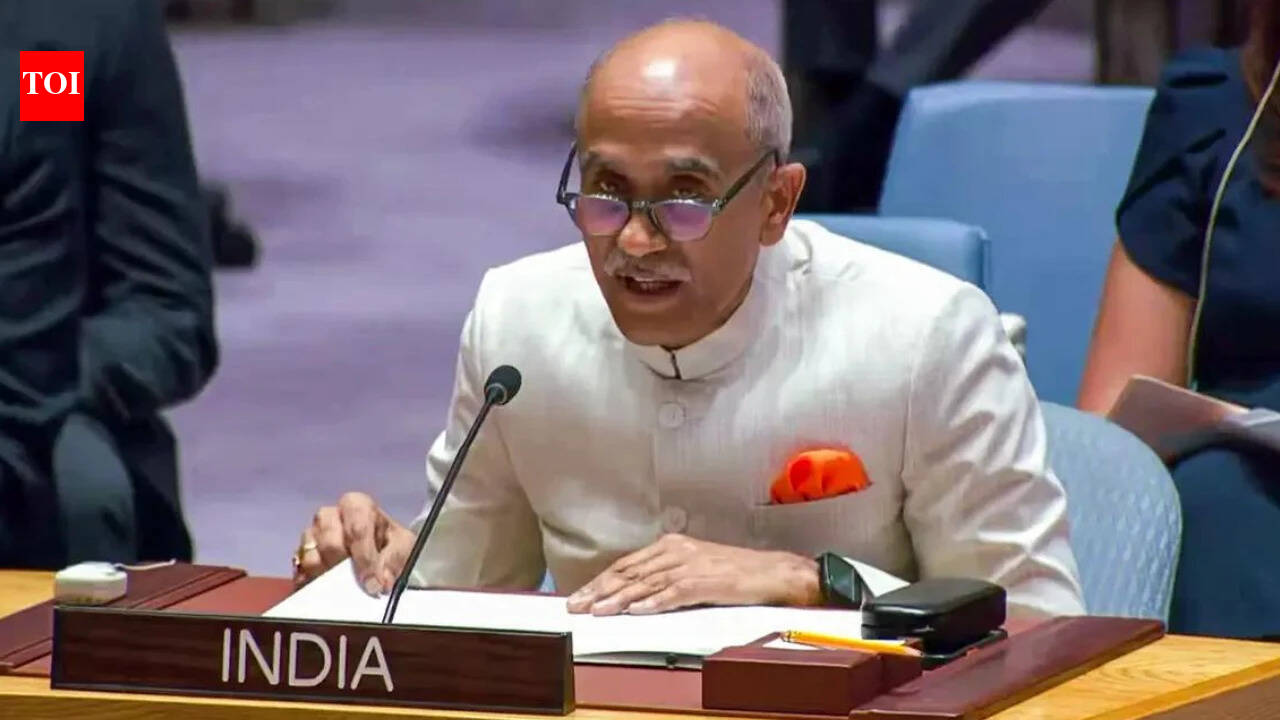
Permanent Representative of India to the United Nations Harish Parvathaneni (Photo: PTI)
India has reiterated its demand for comprehensive reforms in the United Nations Security Council (UNSC), asserting that the veto power held by the five permanent members must be exercised with restraint and should not become an instrument of “narrow political expediency".
Delivering India’s statement at the United Nations in New York, India’s Permanent Representative to the UN, Ambassador Parvathaneni Harish, called for the early start of text-based negotiations on Security Council reforms, with clear timelines and milestones.
India also stressed that reforms must address all key aspects of the Council’s functioning simultaneously, including categories of membership, regional representation, the size of the Council, working methods and the veto.
“India has always maintained that the veto, which is right now a prerogative only of the five permanent members of the UN Security Council, is a responsibility that must be exercised with great restraint, especially on matters bearing upon the maintenance of international peace and security. It should not be an instrument of narrow political expediency," Harish said.
INDIA CALLS FOR COMPREHENSIVE UNSC REFORMS
Underscoring the need for a comprehensive approach, the Indian envoy said addressing the veto in isolation would not alter the existing decision-making dynamics among the five permanent members, commonly referred to as the P5.
“Limiting the veto cannot be separated from the questions of categories of membership, regional representation, size and working methods. We need to move forward on all five clusters together," he said.
“India reiterates its call for a comprehensive approach towards Security Council reforms. The starting point is early commencement of text-based negotiations, with clearly defined timelines and milestones. Addressing the veto in isolation does not change the decision-making dynamic of the P5," Harish added.
India’s position, he indicated, is that negotiations must proceed across all five areas rather than focus exclusively on restrictions on the veto.
INDIA FLAGS RECORD OF VETO USE
Highlighting the historical use of the veto, Harish said the record reflected concerns about how the power had been exercised over the years.
“The record of the Veto is stark. Over the life of this Organisation, the veto has been exercised 331 times on around 200 resolutions," the Ambassador said.
He noted that two of the five permanent members had not exercised a veto for more than three and a half decades, while most vetoes or threats to use the veto had come from only three permanent members.
Harish also referred to the Veto Initiative of 2022, which mandates a United Nations General Assembly debate whenever a veto is cast, with the stated objective of strengthening accountability.
However, he said the number of vetoes exercised since the adoption of UN General Assembly Resolution 76/262 presented a contrasting picture.
‘DE FACTO VETO’ ALSO A CONCERN
Harish also drew attention to what he described as an “effective or de facto veto" within the Security Council, arguing that the influence of the veto extends beyond formal votes cast in the open.
“The veto is not only what is cast in the open. There is also the ‘effective or de facto veto’ that every Council member, elected and non-elected, holds over presidential statements, press statements and the decisions of sanctions committees, where the unwritten rule of consensus allows a single member to hold or block a proposal, most often without explanation," he said.
According to the Indian envoy, the consensus-based process can allow individual Council members to block proposals even when no formal veto is exercised.
INDIA SEEKS EQUAL RIGHTS FOR ALL PERMANENT MEMBERS
Reiterating India’s position on the veto, Harish said it remained aligned with the Common African Position on Security Council reform.
“We reiterate that as long as a veto exists, it must be held by all permanent members of a reformed Council. Fairness and justice demand that all permanent members enjoy the same rights and responsibilities," he said.
He cautioned against creating a separate category of permanent members that would not enjoy the same veto powers as the existing P5.
“A new category of permanent members, with or without the veto, would only further complicate a discussion that is already difficult, and would further entrench the very inequity we are seeking to correct," Harish said.
He also argued that periodic elections and the concept of permanent membership were fundamentally contradictory.
Handpicked stories, in your inbox
A newsletter with the best of our journalism
About the Author

Vani Mehrotra is the Deputy News Editor at News18.com. She has more than 10 years of experience in national and international news and has previously worked on multiple desks.
First Published:
October 27, 2026, 07:59 IST
Disclaimer: Comments reflect users’ views, not News18’s. Please keep discussions respectful and constructive. Abusive, defamatory, or illegal comments will be removed. News18 may disable any comment at its discretion. By posting, you agree to our Terms of Use and Privacy Policy.
Read More




 English (US) ·